Wondering whether Stonington feels more like a waterfront village or a quiet country town? The truth is, it can be both. If you are trying to decide where your daily life would feel most natural, this guide will help you compare coastal-village living and countryside homes in Stonington so you can focus on the lifestyle that fits you best. Let’s dive in.
Why Stonington Offers Two Lifestyles
Stonington is not a one-note market. The town spans about 42 square miles and includes four separate villages: Old Mystic, Mystic, Pawcatuck, and Stonington Borough. The town also describes itself through a mix of coastline, uplands, rivers, and sheltered harbor areas, which helps explain why buyers often see two very different living experiences here.
That contrast matters when you start home shopping. Some buyers want to be close to the harbor, village streets, and public waterfront access. Others want more land, more separation between homes, and a quieter daily rhythm away from the village core.
For broader context, Stonington had an estimated population of 18,832 in 2025, and the median value of owner-occupied housing units was $483,400 in the 2020 to 2024 American Community Survey. Those figures do not define every neighborhood or property type, but they do offer a useful snapshot of the townwide backdrop.
What Coastal-Village Living Feels Like
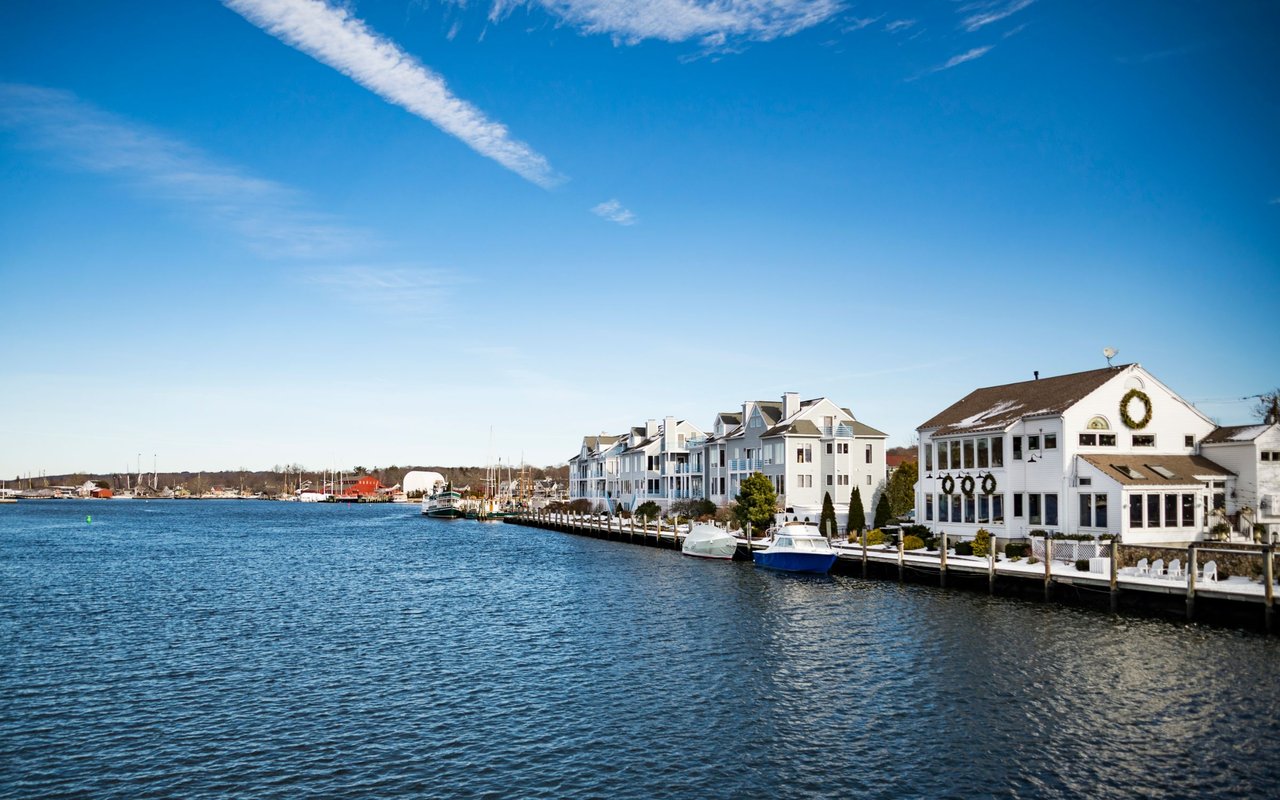
If you picture morning walks near the water, easy access to boating, and a compact setting with activity centered around the harbor, coastal-village living may be your match. In Stonington, Stonington Borough is the clearest example of that lifestyle.
The Borough has deep local history and a strong waterfront identity. The town describes it as the oldest continuously operating borough in Connecticut, dating back to 1803. Its coastal character shows up in features like the harbor light, marina access, a small-boat association, a public pier, and a kayak and boat launching ramp.
Daily life in this setting tends to revolve around a more compact village pattern. Dining and waterfront amenities cluster around Water Street and the harbor, creating a more walkable, water-oriented environment than you typically find in a spread-out inland area. If you like the idea of stepping out for a walk and feeling connected to the harbor, this is a meaningful advantage.
Coastal-Village Highlights
Buyers who prefer the village side of Stonington often value:
- Harbor and marina access
- Public pier and launch access for small boats and kayaks
- A compact, walkable village core
- Historic character and waterfront views
- Easy access to preserves and coastal recreation
The Borough also offers more than just boating. Local resources highlight nearby outdoor spaces such as Dodge Paddock & Beal Preserve, Fennerswood Preserve, Hoffman Evergreen Preserve, Knox Family Farm, and Wayland’s Wharf. That means your free time can include both waterfront activity and land-based trails and open space.
What To Know About Coastal Regulations
Coastal living in Stonington comes with clear benefits, but it also comes with added layers of review. This is one of the most important practical differences between village-coastal property and inland property.
Stonington’s zoning regulations include a Coastal Area Management Overlay District and a Flood Hazard Overlay District. The Residential Coastal district, called RC-120, is intended to preserve habitat and provide flood protection in coastal areas that include coves, estuaries, tidal marshes, and wetlands.
The current zoning standards set a minimum lot area of 120,000 square feet in the RC-120 district. The regulations also require a 100-foot non-infringement area from tidal marshes and significant natural resources, except in certain approved cases involving boat and yacht facilities. In practical terms, if you are considering changes to land or structures near marshes, estuary edges, or flood-prone areas, you should expect more waterfront-specific review.
That does not make coastal property less appealing. It simply means your decision should account for both the lifestyle and the property rules that shape it.
What Countryside Living Feels Like
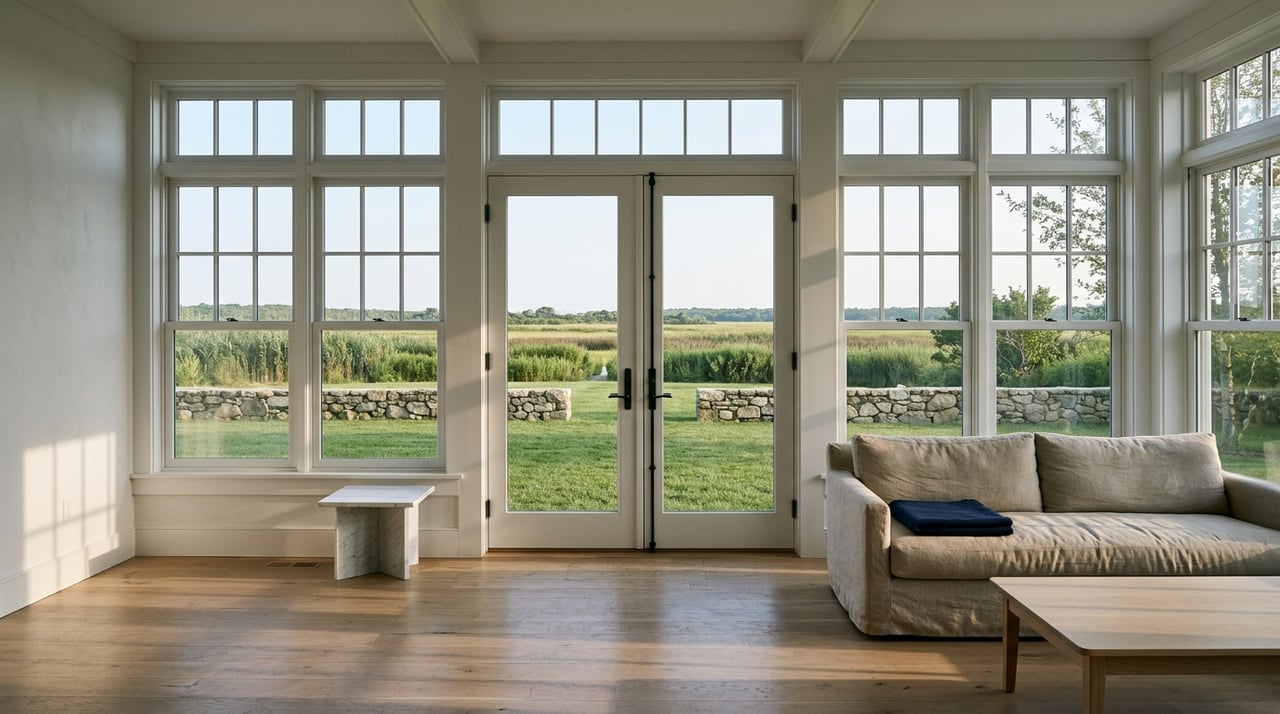
If your ideal home life includes more privacy, more land, and a little more breathing room, the countryside side of Stonington may feel like a better fit. This part of the market is best understood through the town’s inland upland areas and its Rural Residential district, known as RR-80.
The town uses RR-80 where land conditions limit denser development, and the district is meant to retain rural character. That purpose shows up clearly in the zoning standards. The current rules require an 80,000-square-foot minimum lot, 200 feet of frontage, and a maximum lot coverage of 15%.
For buyers, those standards usually translate into a more spacious setting. You may find more distance between homes, more room for outdoor use, and a stronger sense of separation from the activity of the harbor and village core. If you value quiet roads, open space, or room for a garden or accessory structures where permitted, this side of Stonington may align better with your goals.
Countryside Highlights
Buyers drawn to inland Stonington often prioritize:
- Larger lots and more open space
- Greater privacy between homes
- Lower-density surroundings
- A quieter, more rural daily pace
- Separation from harbor and village activity
A nearby comparison helps frame this lifestyle even more clearly. In North Stonington, the R-80 district extends through the northern three quarters of town and includes much of the town’s reserved open space and agriculture. The town describes those areas as lightly developed, remote from municipal facilities and services, and intended to preserve low density and rural character. North Stonington also reports more than 20,000 acres of protected open space, forest, farmland, recreation areas, and conservation easements.
That regional context helps illustrate what “countryside” can mean in this corner of southeastern Connecticut. It points to a landscape shaped by space, lower density, and a more obvious break from harbor-centered activity.
Coastal Village Vs Countryside at a Glance
If you are narrowing your search, this simple comparison can help:
| Priority | Better Fit in Stonington |
|---|---|
| Harbor access | Coastal village |
| Boating and kayaking convenience | Coastal village |
| Walkable village setting | Coastal village |
| Historic waterfront character | Coastal village |
| Privacy | Countryside |
| Larger lots | Countryside |
| Rural feel | Countryside |
| Quieter daily rhythm | Countryside |
This is not about one option being better than the other. It is about matching your home search to how you want to live day to day.
How To Choose the Right Fit
A good way to decide is to think beyond the house itself. Ask yourself what you want your mornings, weekends, and routines to look like.
If you want public waterfront access, a village core, and the energy of living near the harbor, the coastal side of Stonington may feel more natural. If you want more land, more separation, and a setting shaped by rural character, the inland side may suit you better.
You should also think about how much property complexity you are comfortable with. Coastal homes can offer a remarkable setting, but they may also involve more review related to flood hazards and coastal resources. Inland homes may offer a simpler ownership experience in that respect, depending on the property and location.
Why This Choice Matters in Stonington
Stonington stands out because it deliberately contains both experiences. You are not choosing between two different towns with two different identities. You are choosing between two distinct ways of living within the same town.
That is part of what makes this market so appealing. You can look for a harbor-focused home near village activity or a more private property with a rural feel, while still staying within the broader Stonington community.
As you compare options, it helps to work with advisors who understand both the visual lifestyle appeal and the local rules that can affect a property decision. At Jonathan Shockley, we help buyers make thoughtful, informed moves across Stonington’s coastal and countryside settings with local insight and a design-minded perspective.
FAQs
Which area in Stonington is better for boating access?
- Stonington Borough is generally the better fit for boating because harbor access, marina access, the public pier, and kayak and boat launching facilities are concentrated there.
Which area in Stonington is better for privacy?
- Inland countryside areas are generally better for privacy because the RR-80 rural district is designed for lower-density residential living with larger lots and more separation between homes.
What is the biggest challenge with coastal homes in Stonington?
- The biggest added consideration is coastal and flood-related review, since Stonington uses coastal and flood overlay regulations and applies added standards near tidal marshes and other coastal resources.
Are countryside homes in Stonington usually on larger lots?
- Yes, the RR-80 district requires an 80,000-square-foot minimum lot, which supports a more spacious and rural residential pattern.
Does Stonington have both village and rural housing options?
- Yes, Stonington includes a mix of coastal villages, harbor areas, and inland uplands, which gives buyers access to both village-style and countryside-style living within the same town.